

Cologne 50667: 7 new additions!

Seven newcomers await us in the near future “Cologne 50667” – and they mess up a lot! Um, who exactly is it?
“Cologne 50667”: Nico turns Leonie’s head
For one thing is there Nico, played by Salvatore Romanowho has been part of the “Köln 50667” cast since Monday. Also due to Kevin’s departure and her unexplained relationship status, Nico’s presence makes Leonie increasingly nervous. She notices that she obviously likes the new one more than she actually wanted to admit! Is there any more bald head?
“Cologne 50667”: Meike falls in love with George
Another new addition is turning the head of a well-known fan favorite: Meike is fascinated by George (Jay Luzayadio), a traveler who wants to open a hostel in town and hopes they will become more than friends. However, when George admits that he is not very good for relationships, Meike is offended and frustrated. Do you actually have your new acquaintance’s next love interest? Or is she still trying to land with George?

“Köln 50667”: Lisa and Dascha move in with Meike
But even without George, Meike will have all sorts of hustle and bustle around her ears in the next few weeks: her cousin Lisa (Jamuna Johann) and her girlfriend Dasha (Anastasia Bogomolov) show up with her on Mondays to have a place to stay for the first few weeks of their studies. At first, Meike would like to send her cousin away again, but she decides to give Lisa and Dasha shelter.
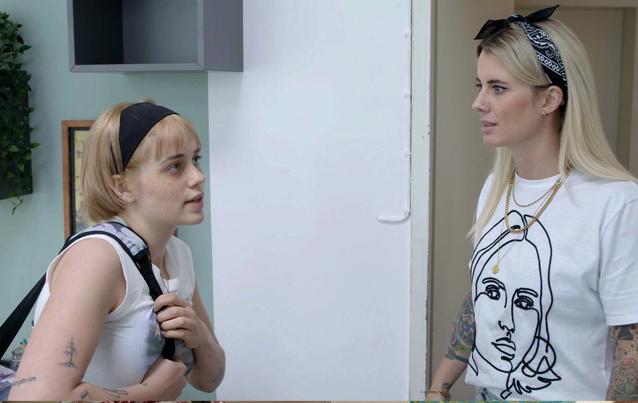
with a strange feeling in the stomach area – because Meike knows something that Lisa should actually know, but doesn’t want to tell Lisa …

“Cologne 50667” confession of tears: Meike has a daughter!
The next week will be exciting at Meike, because how … Read more “
“Cologne 50667”: BTN-Lilly appears
On Wednesday an actress known from “Berlin – Day and Night” joins “Köln 50667”: Amanda Bella Ciss, Denny’s girlfriend died last year Lilly mimes. What exactly she does in the city is not yet known.
Agree & read on
Our editorial team has an external to tell this story Content from Instagram
selected and added at this point in the article. Before we display this content, we need your consent. You can revoke your consent at any time, e.g. through the data protection manager. This does not affect the legality of the processing carried out up to the next revocation.
Yes, I agree and would like to see the content
“Köln 50667”: Hannes and Mo are also new
Also new for the next week in Cologne’s Kiez: Jeremy Mutschall. The 23-year-old first worked as a soccer coach before switching to acting. He embodies the student Hannes WagnerMeike’s cousin Lisa is keeping an eye out. Will the two get together?
Amadin Piattello, from October 8th as Mon WILL be seen, WILL be less concerned with Liebestohuwabohu in his role. His character learned early on to be on his own, but also came into contact with alcohol and drugs at an early age. He seems to be more of a troublemaker, because according to “Promiflash” Mo seems to know how to “start a business” with alcohol and drugs.
We can be curious! How it continues with “Cologne 50667”, we will soon find out on RTLzwei and in advance on TVNOW. *
* Affiliate link
/cloudfront-eu-central-1.images.arcpublishing.com/madsack/KII5M5SFJZEIZIXMQLPUV4DNNE.jpg)