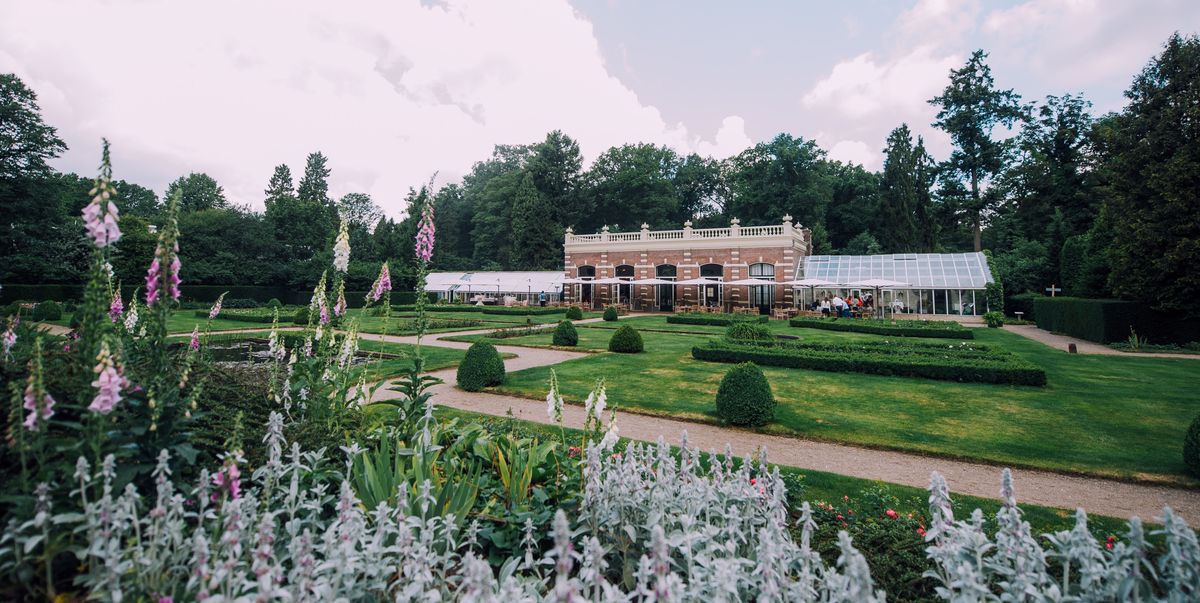
Tired of the city and want to dream away for a while in the luxury of your own estate? Go to a country house or castle in the green, to simply do nothing. The only thing on the agenda: good food, viewing inspiring interiors and massages.
Many of the mansions and castles were built in the seventeenth century by urban (Amsterdam) rich who sought peace, space, nature and entertainment in a green environment, away from smelly canals and urban bustle. For a long time those places were only for the happy couple accessible, nowadays everyone can stay and dine there. Lucky us.
What to do these winter days? Book an overnight stay in one of these hotspots and imagine yourself in a castle novel. Don’t forget your book.
1
Parc Broekhuizen
Parc Broekhuizen in Leersum has been hailed and praised all the time. It is beautiful indeed, but a weekend there is more than just velvet sofas and enjoying the beautiful drapes of the curtains. The kitchen restaurant Voltaire has one Michelin star and vegetables with and herbs from their own vegetables. At the relaxed bistro Lof you eat culinary classics to immerse yourself in casual.
In between you can enjoy good massages in your room or in the garden shed, walk on the Utrechtse Heuvelrug or wander through the country house – just for inspiration.
parcbroekhuizen.nl
2
Parc Broekhuizen
One of the spacious rooms in Parc Broekhuizen.
3
Estate Duin & Kruidberg
The Duin en Kruidberg estate in Santpoort is another pearl, not far from the sea in the Zuid-Kennemerland National Park. Wealthy Amsterdammers once went there to sniff the sea air and have a pleasant time – or simply do the languidly nothing you feel like doing. Duin en Kruidberg still has the grandeur of the past, which you can especially feel in the beautiful restaurant room; also on your plate. Wood panels and wainscoting: everything right on Pinterest.
At Spa & Wellness ‘t Princenbosch you can treat yourself (and your belle or beau) to an afternoon of relaxation in the sauna and wellness treatments with fragrant balms from Polynesia and originating from Egypt.
dune-kruidberg.nl
4
Estate Duin & Kruidberg
The lobby of Landgoed Duin & Kruidberg.
5
Great Warnsborn
Last retreat tip: Groot Warnsborn estate in Arnhem, close to Hoge Veluwe National Park. If you leave the estate, you will of course spend a few hours in the always inspiring Kröller-Müller museum with its famous sculpture garden. Also a great address for architecture enthusiasts, with the museum buildings by Henry van de Velde and Wim Quist and the pavilions by Gerrit Rietveld and Aldo van Eyck. Anyway, that’s an aside, because there’s a good chance that you don’t want to leave the Groot Warnsborn site at all.
Ask for a loft-like room and you’ll never want to leave. An exception can be made for restaurant La Belle Source – two red cutlery in the Michelin guide, so a clear indication of delicious – or Bar de Bron, where the delicious homemade cocktails give you a real boost.
Grootwarnsborn.nl
6
Great Warnsborn
One of the luxury rooms in Groot Warnsborn.
This content is created and maintained by a third party and imported to this page to help users provide their email addresses. You may find more information about this and similar content at piano.io