Language is the key to a good life in Norway

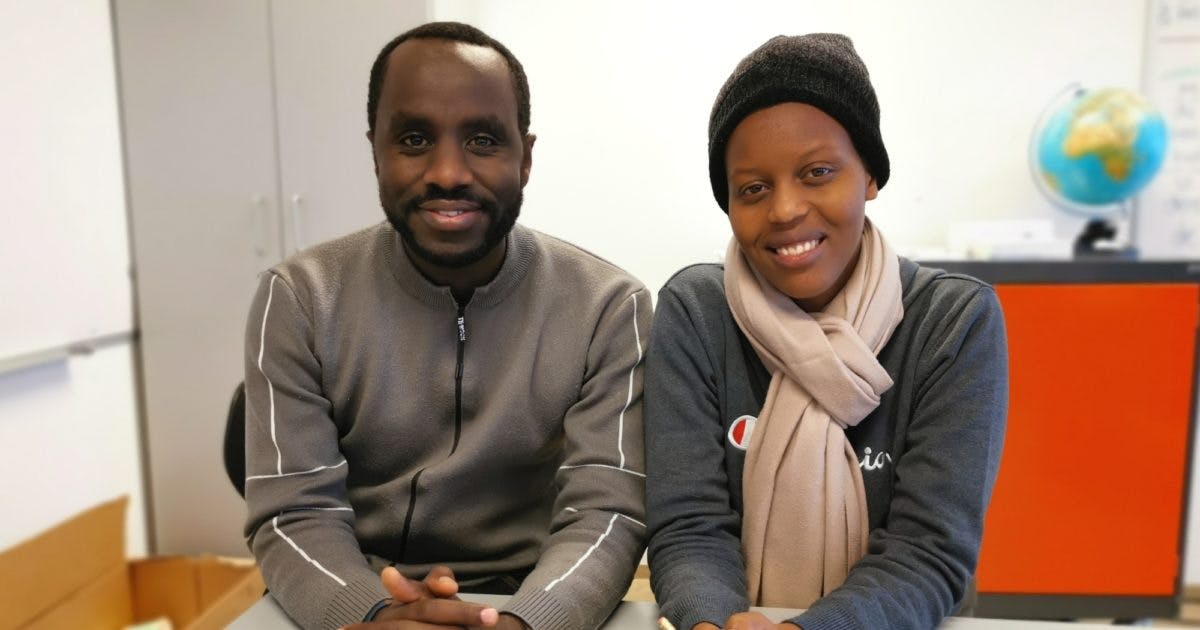
Emmanuel Gabira (30) and Chantal Gateyeneza (28) came from Rwanda to Norway on the last day of June. With them was their 2.5-year-old son and to university. Now they are in the process of learning Norwegian at Elverum learning center.
– I have a master’s degree in neurological nursing, says Emmanuel.
He has submitted all papers and receipts for at least parts of the education being approved in Norway. Chantal is a midwife. She is prepared to have to do the whole educational race again.
– I want to work as a midwife, she says in steady Norwegian.
600 hours of Norwegian lessons
Emmanuel and Cahntal are quota refugees. They are originally from the Congo, but have lived in Rwanda for the past 25 years.
– We were refugees in Rwanda. That was where we studied, says Chantal.
At the learning center, they have Norwegian and social studies six hours every day from Monday to Friday. Together, they will complete 600 hours of Norwegian lessons, that is the requirement for relocations.
– Motivated and good people
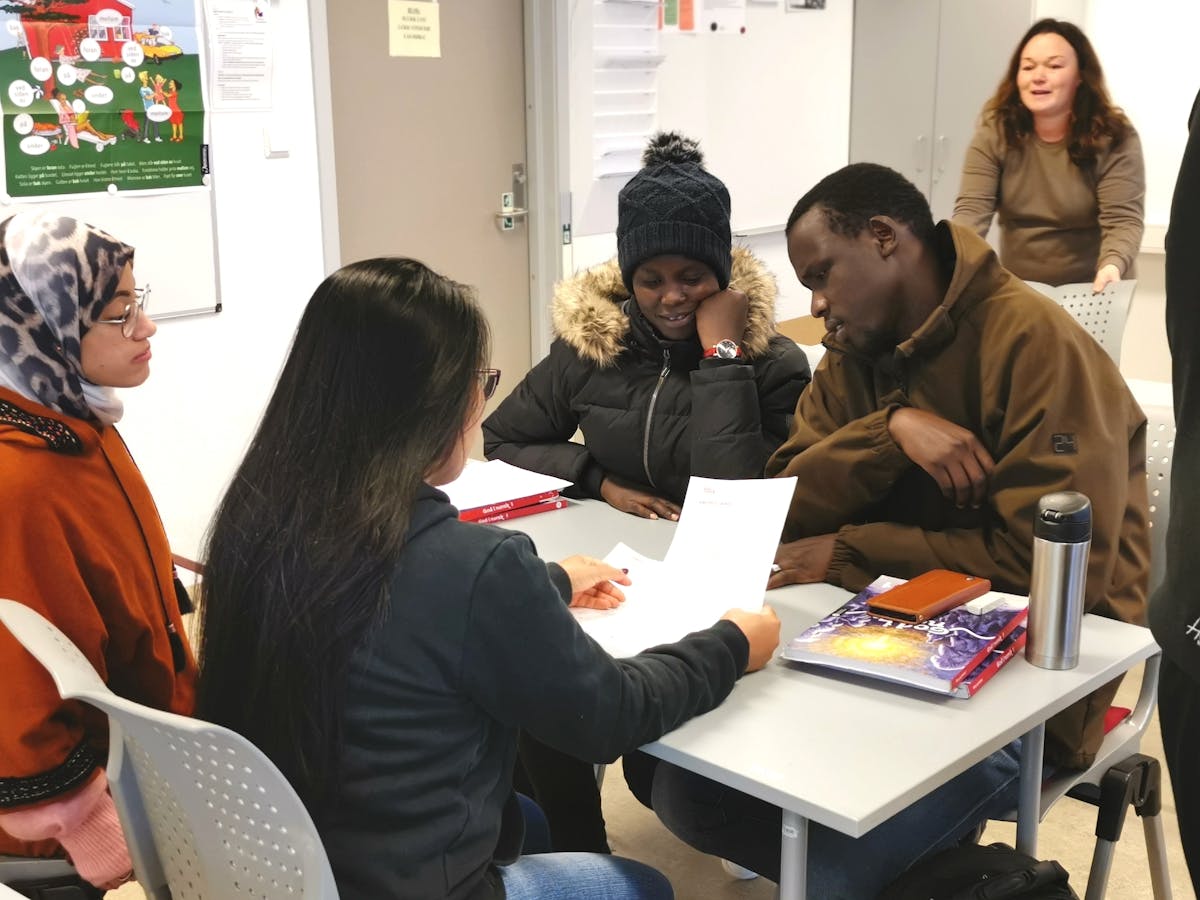
The beginner class in Norwegian counts 18 students this autumn. There are many happy ones, thinks contact teacher Lena Berg Andersen.
– In the last year, we have had a decline in the number of students. There are fewer refugees, both because of the pandemic and because the borders with Europe are closed. That is why it is very fun that we have so many in a beginner class. Not only refugees, but also migrant workers and family reunified. Most of them came to the country in June / July and sat down on the school bench in August, says Andersen.
Has different goals
The class has students from a total of 10 nations. There is a great spread in age; the youngest is 16 years old, the oldest over fifty. Some have found each other and hang out a bit in their free time, others meet in their spare time. Among the 18 students, there are also three married couples.
– The students have different goals. Some will only learn Norwegian well enough to get a job, others will take higher education in Norway. Common to this gang is that they are all very motivated and good people, says Andersen.
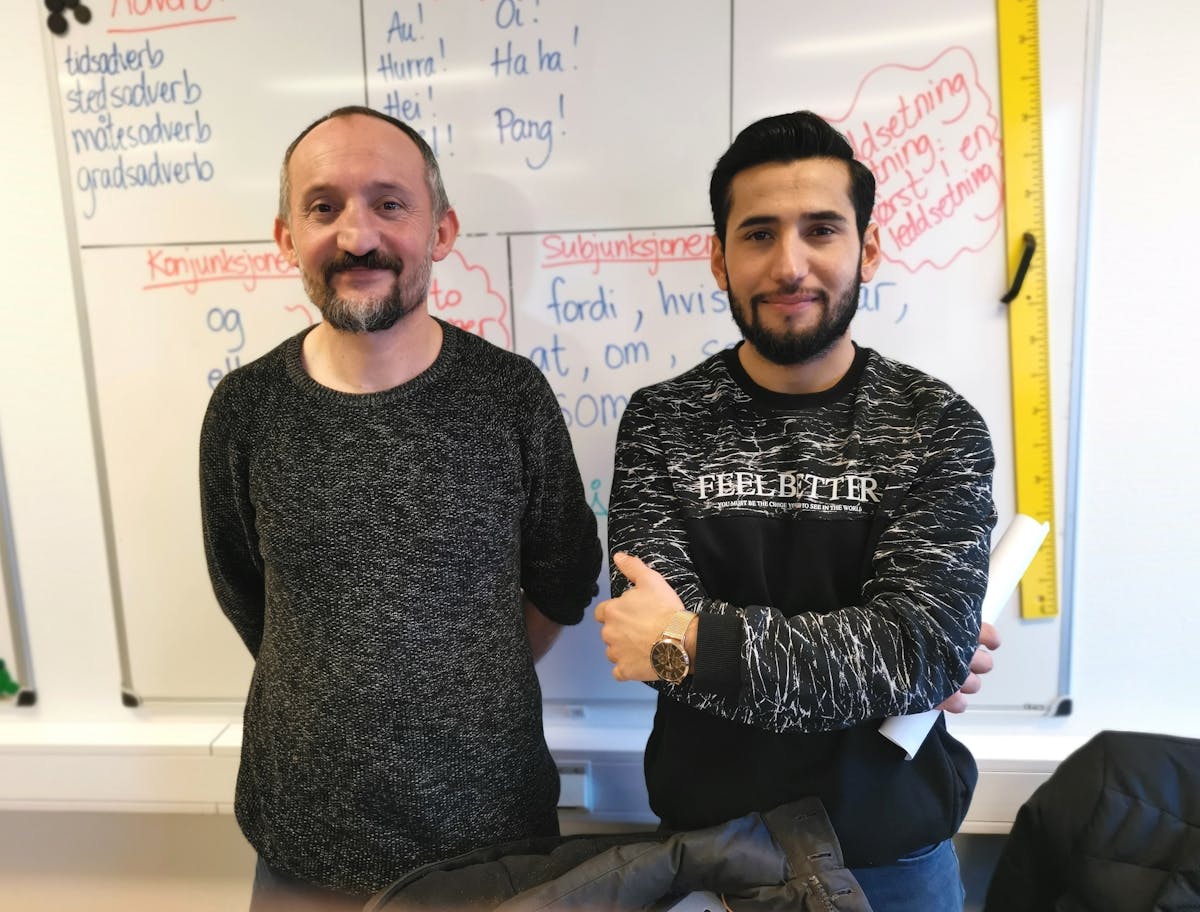
Norwegian is a difficult language to learn for most foreign speakers. How difficult it is and in what way often depends on your mother tongue.
Linguistic challenges
– If you come from Thailand, it may be that you have difficulty with pronunciation. Turks often have problems with grammar, such as being able to shuffle the words in a sentence in the correct order. In the class we have two young people from Germany. German is linguistically close to Norwegian, so then it’s easier. In addition, age and motivation play a role, and what you should use the language for afterwards. The interesting thing is that all of these go in the same class and that they do not speak English. It has its advantages, because then they will have to speak Norwegian with each other, says Andersen.
She believes she has found the dream job.
– I meet so many exciting personalities from different countries and cultures, nice people who can contribute to society. Language is the key to being able to participate actively, says Andersen.